
Trouvez des services pour personnes handicapées dans le Maryland(ouvre dans un nouvel onglet)
Que vous soyez en situation de handicap ou que vous preniez soin d'une personne en situation de handicap, renseignez-vous sur les programmes communautaires. Ils accompagnent les personnes de tous âges et de toutes capacités, et vous permettent ainsi de travailler, d'apprendre et de vous divertir.
Ces ressources inclusives peuvent aider les habitants du Maryland à éliminer les obstacles de la vie quotidienne pour les personnes atteintes de handicaps physiques, visuels ou d'apprentissage, y compris les handicaps liés au vieillissement ou à un problème de santé.



Accédez aux ressources pour personnes handicapées
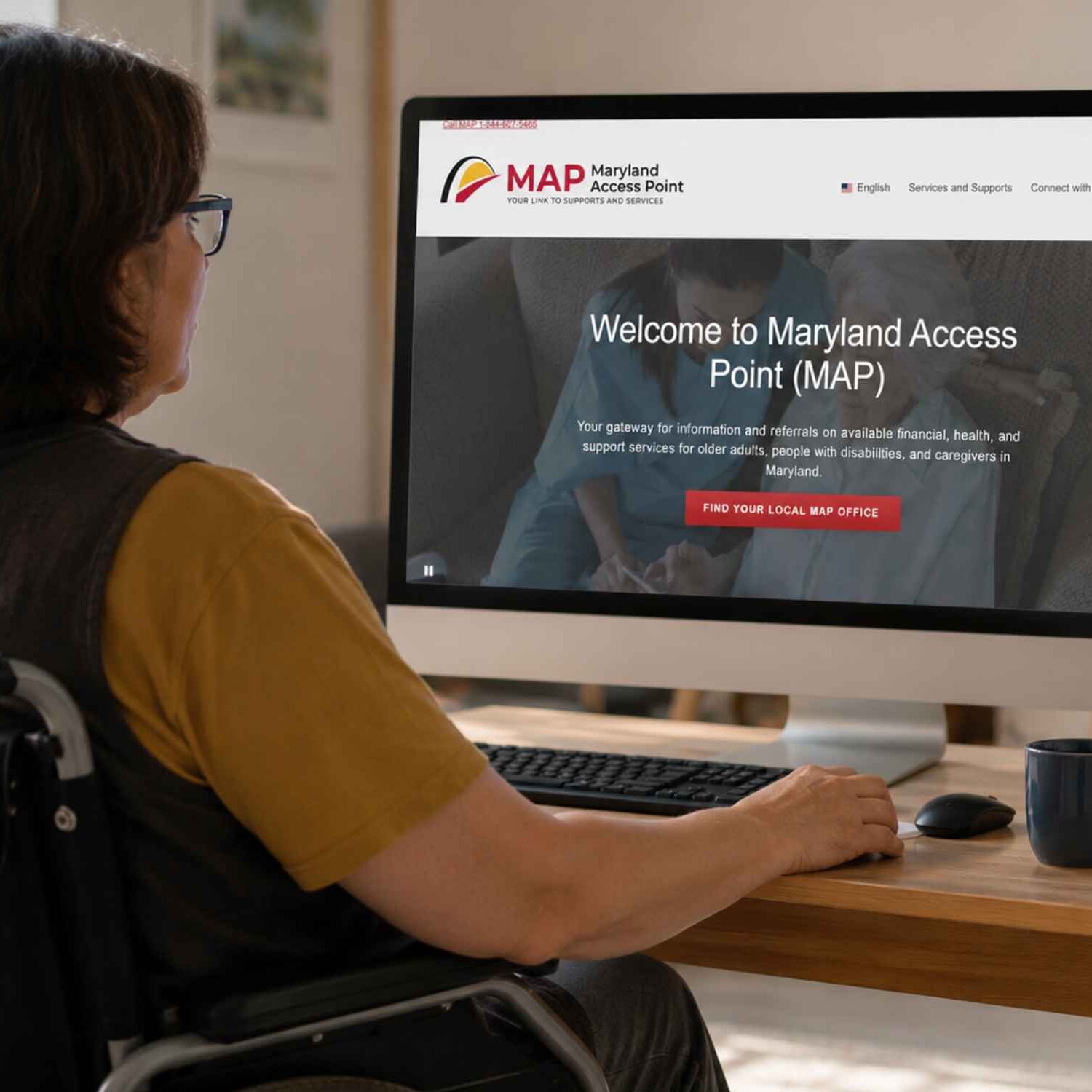
Les bureaux du Maryland Access Point (MAP) servent de point d'entrée unique pour les personnes âgées et les adultes (18 ans et plus) handicapés, fournissant des informations sur une grande variété de services.
Il existe 20 sites MAP locaux dans tout le Maryland, offrant des services de soutien à long terme aux personnes qui en ont besoin, ainsi que des ressources communautaires.
Un accompagnement personnalisé est proposé. Notre personnel qualifié peut également évaluer les besoins, fournir des ressources et orienter les personnes vers les organismes compétents, et contribuer à l'élaboration d'un plan d'action.
Trouver des ressources pour les personnes handicapées
Le Maryland Information Network, qui gère les services 211 dans le Maryland, alimente la base de données de ressources Maryland Access Point.
Le 211 répond également aux appels MAP. Appelez le 1-844-MAP-LINK (1-844-627-5465) pour parler avec un spécialiste du 211 pour les besoins et le soutien liés au vieillissement.
Outil de recherche de ressources chez Kennedy Krieger
Pour parler à une personne spécialisée dans les ressources pour les personnes ayant une déficience intellectuelle ou un trouble du développement et les troubles associés, effectuez une recherche. Le chercheur de ressources, par l'intermédiaire de Kennedy Krieger.
Ils sont spécialisés dans les services disponibles et peuvent vous aider pour la garde d'enfants, les activités de loisirs, le soutien financier et plus encore. Appelez le 1-800-390-3372.
Relais du Maryland
Si l'utilisation du téléphone vous pose problème, passez votre appel via Maryland Relay. Ce service public gratuit permet aux personnes sourdes, malentendantes ou aveugles du Maryland de téléphoner. Les personnes ayant des difficultés cognitives, des troubles de la parole ou une mobilité réduite peuvent également composer le 711 pour utiliser Maryland Relay.
Dépistage des troubles du développement
Si vous soupçonnez un handicap ou un retard de développement, contactez-nous. services de dépistage du développement dans le Maryland.
Vous pouvez également rechercher dans la base de données 211 des ressources éducatives locales et des services de soutien.
Outils pour faciliter la vie quotidienne : technologies d’assistance (TA)
Les technologies d'assistance (TA) offrent aux personnes handicapées une plus grande autonomie et une meilleure connectivité. Qu'il s'agisse de lecteurs d'écran ou de logiciels à commande vocale, de fauteuils roulants ou d'autres équipements de mobilité, ou encore d'aménagements du domicile et du véhicule favorisant l'accessibilité et la sécurité.
Des programmes ont été mis en place dans le Maryland pour faciliter l'accès aux technologies d'assistance, que ce soit par emprunt ou à un prix abordable.
Emprunter ou tester AT
Essayez les technologies d'assistance avant de les acheter ! Empruntez-les et testez-les pour voir si elles vous conviennent.
Les Programme d'assistance technologique du Maryland MDTAP propose des dispositifs pour la vie quotidienne, les troubles de la vision, les fonctions cognitives et la mémoire, l'audition et la parole. Ces produits peuvent vous aider à utiliser un ordinateur ou un téléphone, à participer à des activités de loisirs ou à vaquer à vos occupations quotidiennes.
La liste d'inventaire MDTAP propose des idées de produits pouvant être utilisés pour diverses tâches, ainsi que leurs prix.
La plupart de ces articles peuvent être empruntés pour une durée d'une à quatre semaines. Les utilisateurs intéressés peuvent bénéficier d'une démonstration par un spécialiste en technologies d'assistance.
Les Centre de réutilisation des technologies de pointe donne accès à du matériel d'occasion.
Chaque bureau Maryland Access Point dispose également d'un kit de démonstration AT. Cela vous permet de tester vous-même les produits et de voir s'ils peuvent vous aider dans vos tâches quotidiennes. Trouvez un bureau MAP près de chez vous.
Emprunter des appareils pour la vie autonome
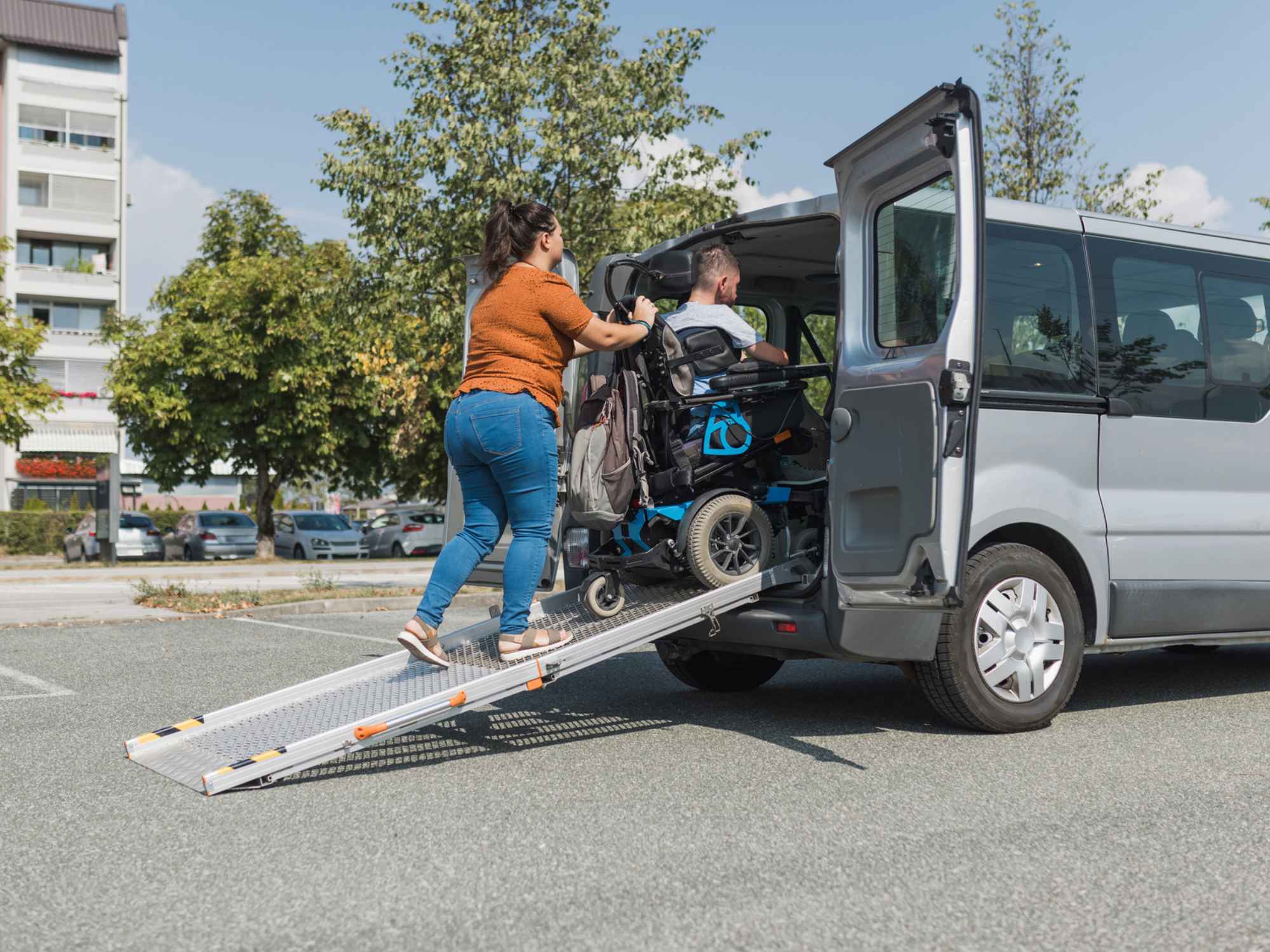
Outre la technologie, vous pouvez également emprunter d'autres appareils pour faciliter votre autonomie. Cela inclut notamment : rampes portables, qui peut être prêté pour une durée maximale de quatre mois.
Il existe même un laboratoire d'impression 3D capable de fabriquer des dispositifs d'assistance simples. Vous pouvez en faire la demande gratuitement. Soumettre une demande 3D.
Pour les équipements médicaux durables (EMD) comme les scooters électriques, les lève-personnes, les fauteuils roulants ou les dispositifs de sécurité, il existe le programme de réutilisation des équipements médicaux durables du Maryland. Ces produits sont mis à disposition gratuitement en cas d'invalidité, de blessure ou de maladie.
Maryland Equips fournit ces services. En savoir plus sur vos options.
Prêts financiers pour AT
Vous ou votre famille pourriez également être admissibles à un prêt à faible taux d'intérêt pour acheter des outils destinés à améliorer votre qualité de vie grâce au Programme de prêts pour les technologies d'assistance (ATLP).
Les prêts peuvent varier de 14 500 à 70 000 et peuvent servir à :
- achat d'un véhicule adapté - jusqu'à $70 000
- modifications de domicile ou de véhicule - jusqu'à $20 000
- achat de technologies d'assistance - jusqu'à $10 000
Des restrictions peuvent s'appliquer. Téléchargez un Demande de prêt dans le cadre du programme de financement des technologies d'assistance ou alors Remplissez-le en ligne. Le formulaire prend environ 20 à 60 minutes à remplir en ligne et il faut compter 30 à 45 jours pour obtenir une décision concernant votre demande (approbation ou refus).
Programmes de vie adaptée
Il existe également des programmes d'adaptation qui permettent aux personnes handicapées d'accéder à la nature, au sport et à d'autres activités récréatives. En favorisant la santé et le bien-être, ces activités contribuent à la résilience et à la vitalité de la communauté.
MedStar Santé L'établissement propose des sports comme le basketball et le tennis en fauteuil roulant, le hockey sur luge, des cours de fitness adaptés, et bien plus encore. Pour les amateurs d'activités nautiques, un programme de voile et de navigation adapté est également disponible. Navigation accessible dans la région de Chesapeake. Il existe également des programmes inclusifs. leçons d'équitation.


S'occuper d'un adulte handicapé dans le Maryland
Les personnes qui s'occupent d'adultes handicapés doivent constamment s'adapter à des infrastructures insuffisantes, notamment en ce qui concerne l'inaccessibilité des toilettes publiques.
Une salle de bain peut être équipée d'une table à langer, mais celle-ci ne conviendra pas à un enfant plus âgé ou à un adulte.
Une loi du Maryland impose la présence de cabines de change universelles dans certains bâtiments publics, tels que les parcs, les centres de loisirs, les gares routières ou les aéroports. Cette obligation s'applique aux bâtiments publics construits après le 1er octobre 2022, ainsi qu'aux bâtiments où des toilettes publiques sont ajoutées ou si des toilettes existantes font l'objet d'une rénovation importante.
Il incombe à l'établissement d'informer le 211 de la présence de la table à langer accessible afin que le public puisse la trouver.
Prestations d'invalidité
Des prestations sont offertes aux personnes souffrant d'un handicap physique, psychologique, émotionnel ou mental. La procédure de demande peut être complexe, mais des experts sont là pour vous aider. Nous pouvons tout d'abord vous présenter les différents types de prestations d'invalidité et vous aider à déterminer celle qui correspond le mieux à votre situation.
Programme d'aide aux personnes handicapées temporaires (PATD)
Ce programme de l'État du Maryland vise à fournir une aide financière temporaire aux personnes en situation de handicap qui attendent de recevoir une pension d'invalidité fédérale. Il s'adresse aux résidents du Maryland à faibles revenus, en situation de handicap et sans enfant à charge.
Ces prestations sont disponibles pendant 12 mois sur une période de 36 mois, sauf si la personne demande également l'ASI.
Si un médecin certifie que l'invalidité est susceptible de durer 12 mois ou plus, la personne doit également déposer une demande de revenu de sécurité supplémentaire (SSI).
Faites votre demande de TDAP auprès du Département des services sociaux (en personne) ou en ligne sur le site Maryland Benefits.
Revenu de sécurité supplémentaire (SSI)
Le SSI est un programme de la Social Security Administration qui verse une allocation mensuelle aux personnes à faibles revenus et disposant de peu de biens, âgées de plus de 65 ans, aveugles ou handicapées.
Pour être admissible aux prestations SSI, l'invalidité doit être prévue pour durer au moins 12 mois. Il est important de noter qu'une personne peut continuer à travailler et à percevoir un revenu tout en recevant des prestations SSI.
Les enfants de moins de 18 ans aveugles ou handicapés peuvent également bénéficier de l'aide sociale. Pour faire une demande d'aide sociale, contactez l'administration de la sécurité sociale au 800-772-1213 ou renseignez-vous.
Assurance Invalidité de la Sécurité Sociale (SSDI)
L'assurance SSDI est un programme de la Social Security Administration qui verse une allocation mensuelle aux personnes souffrant d'un handicap dont la durée prévue est d'au moins 12 mois ou qui devrait entraîner le décès.
L'admissibilité aux prestations et le montant de celles-ci sont déterminés en partie par l'âge auquel la personne est devenue invalide et par la durée de son parcours professionnel.
Pour faire une demande d'assurance invalidité de la sécurité sociale, contactez l'administration de la sécurité sociale au 800-772-1213.
Prestations de survivant de la sécurité sociale
L'Administration de la sécurité sociale gère également les prestations de survivant, y compris un paiement forfaitaire en cas de décès pour les survivants des assurés de la sécurité sociale et des prestations pour les enfants de moins de 18 ans ou handicapés et dont l'un ou les deux parents sont décédés.
Les agences locales de la Sécurité sociale aident les personnes à faire une demande de prestations ou à interjeter appel en cas de refus. Ces agences fournissent des informations sur les conditions d'admissibilité et les droits des demandeurs/bénéficiaires.
Contenu similaire susceptible de vous plaire
-
Aide gratuite à la carrière et à l'emploi dans le Maryland
Les demandeurs d'emploi du Maryland peuvent obtenir une aide gratuite en matière d'emploi et de formation professionnelle auprès de deux organismes : les American Job Centers – centres physiques dans le Maryland…
-
Aide au logement pour les vétérans
Une aide au logement est disponible pour les anciens combattants ayant besoin d'un logement temporaire ou permanent. Voici les recherches les plus fréquentes dans notre base de données de ressources communautaires 211. Vous pouvez…
-
Trouvez des soins de santé gratuits et à faible coût
Vous recherchez une clinique ou une autre ressource médicale, gratuite ou à bas prix ? Les services proposés peuvent inclure des dépistages préventifs, des analyses de laboratoire, des soins de maternité, etc.
-
Aide aux familles du Maryland : programmes de garde d’enfants et prestations sociales
Ensemble, nous pouvons aider les enfants du Maryland à s'épanouir ! Que vous soyez parent, grand-parent, aidant ou membre de la famille, le 211 est là pour vous mettre en relation avec les ressources communautaires.




explorer les programmes d'assistance
Renseignez-vous sur les programmes d’avantages sociaux et sur la façon d’obtenir de l’aide.

Nourriture
Nourriture gratuite près de chez moi, garde-manger, SNAP, WIC, économies sur les courses.

Logement
Paiement des loyers, prévention des expulsions, refuges pour sans-abri.

Utilitaires
Programmes d’aide aux factures d’électricité, de gaz et d’eau.

Impôts
Aide gratuite à la préparation des déclarations de revenus, logiciels, crédits d'impôt
explorer les programmes d'assistance
Renseignez-vous sur les programmes d’avantages sociaux et sur la façon d’obtenir de l’aide.
Nourriture
Nourriture gratuite près de chez moi, garde-manger, SNAP, WIC, économies sur les courses
Utilitaires
Programmes d'aide aux factures d'électricité, de gaz et d'eau
Logement
Paiements de loyer, prévention des expulsions, refuges pour sans-abri
Impôts
Aide gratuite à la préparation des déclarations de revenus, logiciels, crédits d'impôt