Child Development and early Intervention Support in Maryland
Concerns about a child's speech, movement, learning, or behavior can raise many questions. Knowing where to turn for answers is an important first step.
Maryland families can request free developmental evaluations to better understand a child's needs and determine whether additional support may help. Services are available for eligible children from birth through age 21.
Learn how to request an evaluation, what to expect, and how Maryland's Infants and Toddlers Program and Child Find connect children and families to developmental services.



Early Learning and Family Support
Everyday experiences, from playing and reading together to exploring new surroundings, help build a child's developing brain. Maryland offers free community programs to support learning and development during the early years.
Patty Centers support families with children from birth through age 3 through early learning activities, developmental assessments, and parenting education.
Judy Center Early Learning Hubs support families from pregnancy through age 5 with parent-child playgroups, developmental screenings, learning activities, and school readiness programs.
These programs help families understand developmental milestones, strengthen parent-child relationships, and connect with additional support when needed.
Learn more about Patty Centers, Judy Centers, and other family supports.
What are the Developmental Milestones?
Developmental milestones are skills children typically learn as they grow, such as smiling, crawling, walking, talking, and interacting with others. Even a teen's brain is still under construction. While every child develops differently, tracking these milestones can help families recognize when additional support may be helpful.
The Centers for Disease Control and Prevention (CDC) provides developmental milestone checklists for children from birth through age 5, and the Maryland Infants and Toddlers program breaks down what to expect at every age in its milestone chart. Select a child's age and quickly view the developmental milestones and red flags to watch for.
Families with concerns about a child's development can speak with a pediatrician or request a developmental evaluation. A medical diagnosis is not required to make an early intervention referral. Find early intervention programs.
Early Intervention for Children Under 3
If you suspect a developmental delay with speech, walking, eating, or something else, talk to your pediatrician.
Early intervention services help children have a better chance of reaching their full potential. The earlier the services begin, the better.
More than 68% of children who received early intervention services in Maryland were in general education classes by third grade, according to Maryland Infants and Toddlers.
Maryland Infants and Toddlers
For questions about a child’s development or a suspected delay for a child under three years old, request a free evaluation from the Maryland Infants and Toddlers Program.
The program supports children with a 25% or greater developmental delay, atypical development or behavior, or a qualifying diagnosed condition. The delay may be in one or more areas.
Services are matched to the child's needs and may include:
- speech/language therapy
- physical therapy
- occupational therapy
- assistive technology
Families do not pay for Maryland Infants and Toddlers Program services.
How to request early intervention help
Parents and caregivers can refer their children to the Maryland Infants & Toddlers early intervention program. Health care professionals, child care providers, educators, and other professionals can also make referrals.
Request an evaluation by:
- Creating an account with Maryland Infants and Toddlers
- Using your account access to complete a referral
The referral may lead to an evaluation and services for those who qualify.
For questions, call a local Infants and Toddlers program, located in counties throughout the state. You may find the office in the Health Department, public school system, Health and Human Services Office, or Board of Education.
You can also search for an early intervention program in the 211 Statewide Community Resource Database.

Transitioning From Early Intervention to Preschool
As children receiving early intervention services approach their third birthday, families and service providers begin planning for the next stage of support.
Depending on eligibility and individual needs, children may transition to school district supports.
The early intervention team works with families to discuss these options and develop a transition plan that supports continuity of services.
Child Find
For children with a disability, including a developmental delay, Child Find services may be an option at age 3. In Maryland, Child Find offers preschool through high school programs and often works with the local public school system to support children.
There are programs for:
- autism
- deafness
- blindness
- speech or language development
- traumatic brain injury
- emotional disability
- intellectual impairment
- developmental delays
Child Find evaluations are free for families.
Find Maternal and Child Health Supports
We partner with the Maryland Department of Health to provide a one-stop shop for family health support, from pregnant women to parents of adolescents. The resources support child development, special needs, mental health, and basics like food and school clothing.
Supporting Healthy Brain Development
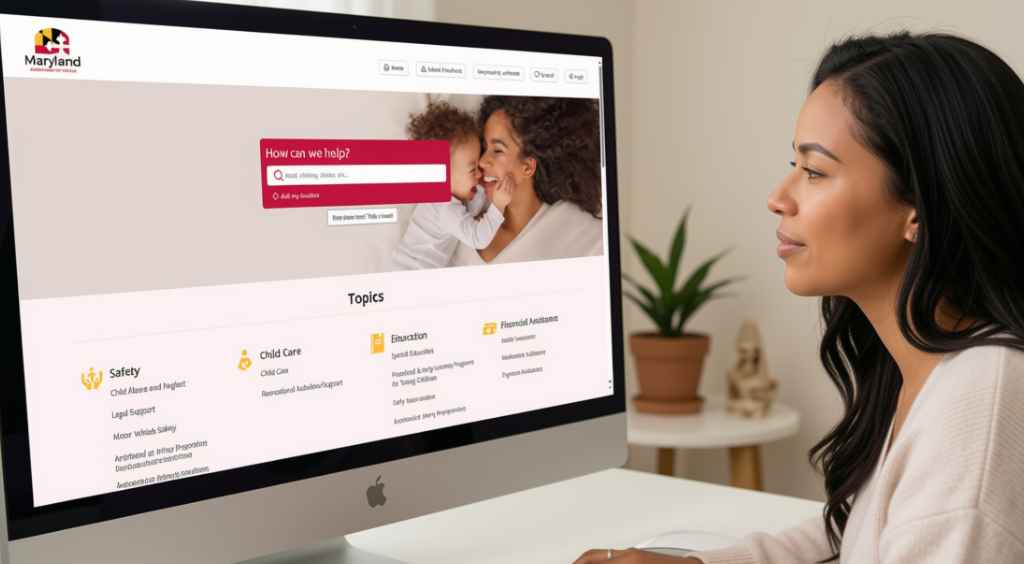
Everyday interactions help shape how children learn, communicate, and build relationships. Playing, talking, and spending time with caring adults can make a meaningful difference in a child's development.
We are committed to helping Maryland families. The Maryland Information Network, which powers 211 services in Maryland, is a backbone organization for Maryland Essentials for Childhood . That's a statewide initiative to prevent adverse childhood experiences and promote positive ones.
Maryland Essentials for Childhood (Maryland EFC) brings together organizations and community partners to connect the science, policy, and people to prevent adverse childhood experiences and promote positive ones. Maryland Information Network, which powers 211 Maryland, is a backbone partner in this statewide initiative because connecting grown-ups to community supports can help children thrive.
Brain-Building Resources for Families
Maryland EFC's Brain-Building Toolkit brings together science-based resources and practical tips to support children's development at different ages and stages.
The toolkit helps parents, caregivers, and other trusted adults understand how everyday experiences and supportive relationships shape children's developing brains.
Make Everyday Moments Count With Vroom
Learning happens every day for children.
Through its collaboration with Vroom, Maryland EFC connects families to free, science-based activities that make learning part of daily routines. Designed for children from birth through age 5, Vroom offers simple activities for playtime, mealtime, bath time, and other everyday moments.
No special toys or equipment are needed. Activities focus on the interactions that help build children's communication, thinking, and social skills.
Find More Developmental and Family Support
Families may need additional resources beyond early intervention, including parenting support, child care, mental health services, and assistance with everyday essentials.
211 Maryland connects families with community programs statewide, including resources for children with developmental disabilities and special health care needs.
Explore more resources.
-
Find Child Care In Maryland | Programs & Financial Help
Finding reliable, affordable child care can be challenging. Families need safe, welcoming environments for their children, schedules that work, and care they can afford. Whether…
-
Child Development and early Intervention Support in Maryland
Concerns about a child’s speech, movement, learning, or behavior can raise many questions. Knowing where to turn for answers is an important first step. Maryland…
-
Where To Go For Parenting Support In Maryland
Parenting is a big job, and no one is meant to do it alone. There’s a community of support waiting to help. Choose what you’d…
-
Getting Help with Child Behaviors
Caring for kids is one of the most important, and sometimes most challenging jobs there is. Raising children takes patience, energy, and support. It’s easy…
-
Help for Children and Families in Maryland
Family needs change as children grow. From baby supplies and child care to school support and everyday essentials, 211 Maryland connects parents, grandparents, and caregivers…





explore assistance programs
Learn about benefit programs and how to connect with support.


Housing
Rental payments, eviction prevention, homeless shelters.

Utilities
Electric, gas, and water bill assistance programs.

Taxes
Free tax preparation help, software, tax credits
explore assistance programs
Learn about benefit programs and how to connect with support.
Utilities
Electric, gas, and water bill assistance programs
Housing
Rental payments, eviction prevention, homeless shelters
Taxes
Free tax preparation help, software, tax credits